
It’s not every day that you get to step inside a sculptor’s studio. Even less so when that sculptor works with something as hard to explain as sensations, intuition, and a very particular way of understanding space.
In the Martutene neighborhood, on the banks of the Urumea River, San Sebastián-based artist Íñigo Arístegui has set up his studio. To reach it, you must walk down a hidden alley that leads to an open space, a sort of stable or inner courtyard. There we are greeted by EsPAZio, a work that invites reflection by recalling tragic events such as the fire of August 31, 1813, the collapse of the Twin Towers, and the atomic bombs dropped on Hiroshima and Nagasaki. A full-blown reality check that forces us to look at ourselves in the mirror as a society.
After this project, we finally arrive at Íñigo Arístegui’s workshop, which could easily be mistaken for a welder’s shop. There, he welcomes us warmly and cordially to begin a conversation in which we try to gain insight into his creative process, his way of observing the city, and how the pieces that eventually become part of a home—such as our Prim,22 property—come to be. Because before it becomes a project, it all starts with a question: What should someone who enters here feel?
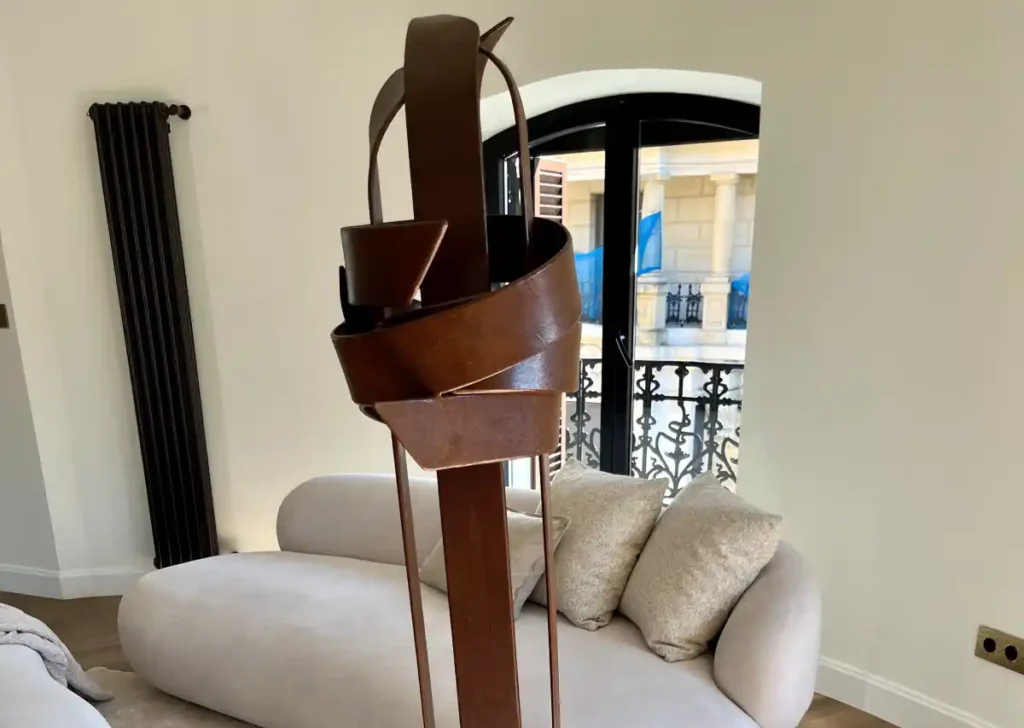
Íñigo Arístegui’s creative process is neither immediate nor superficial. It stems from a combination of technique, thought, and sensitivity that finds its fullest expression in a quote from St. Augustine that defines his approach to work: “He who works with his hands is a laborer; he who works with his hands and his head is a craftsman; and he who works with his hands, his head, and his heart is an artist.”
One of the most interesting points that came up in our conversation is his approach to a commission. Arístegui doesn’t start with a fixed idea. He doesn’t simply “place” a work in a space. What he does is something different:he tries to discover the sensibility of the place. “And once you discover it, you find the way.” This involves observing, exploring, and understanding.
Not just the physical space, but what it conveys. In the case of a home, that translates into something very concrete: what the person living there will feel.
Unlike other more technical or rational processes, his has a distinctly intuitive element. There are no set formulas for deciding on materials, forms, or compositions. “There’s no logical explanation. They’re intuitions.” He even speaks of how each person or each space “exudes” something different—a kind of invisible language that he tries to interpret. An intuition, an instinct that doesn’t replace technique, but guides it.
Another key aspect of his approach has to do with his relationship with materials. In contrast to the idea of control, Arístegui proposes something very different: “You don’t have to tame any material. You have to befriend it.” Iron, steel, wood… each has its own behavior, its limits, and its possibilities. Trying to impose a form can ruin the work. Understanding the material allows the piece to work. It’s an approach that blends respect, craftsmanship, and experience. Because Arístegui isn’t just a sculptor: he’s a blacksmith, a welder, a carpenter, a mason… artisanal trades he’s developed as he’s carved out a long international career.
The city comes up constantly in conversation. Not merely as a backdrop, but as an active part of the creative process: the Ensanche district, the Urumea River, the history of local trades, the relationship between architecture and daily life… Arístegui speaks of San Sebastián as someone who has lived there, not just observed it.
And that is evident in the way he constructs his pieces—pieces that, far from being abstract, are deeply connected to the place.
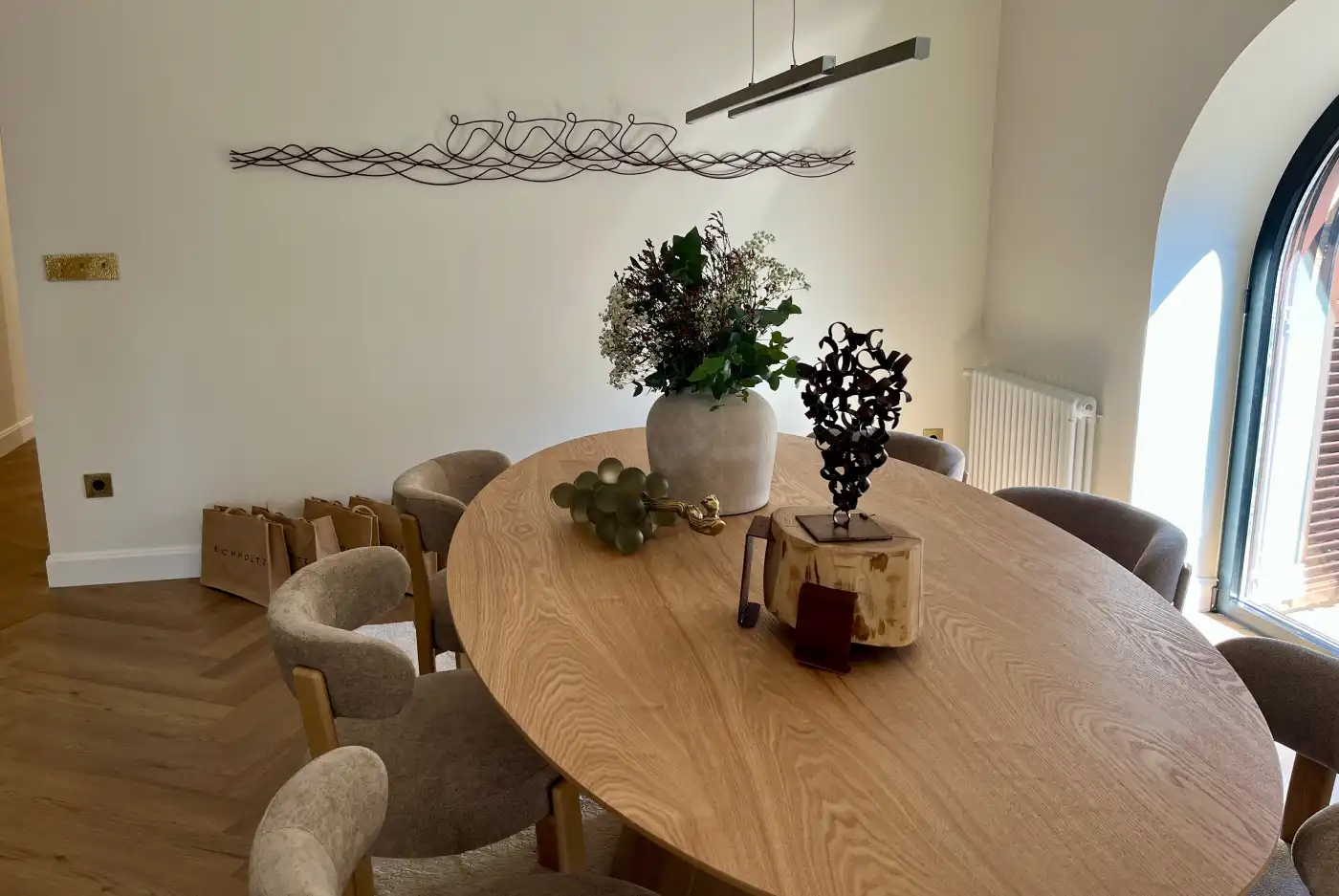
When asked what he hopes people will feel when they enter a home featuring his artwork, his answer is straightforward: “That they connect with it. That they feel at ease.” He isn’t talking about visual impact or taking center stage, but rather something much harder to achieve: that the artwork helps the space resonate emotionally. The sculptures aren’t the focal point. They serve to enhance the experience of the space.
In the project at 22 Prim Street, this approach has resulted in four distinct works, each designed for a specific moment within the home.
Regardless of their form, they all share the same purpose: to accompany the life that will unfold in that space.
There is one particularly interesting aspect regarding how the artist himself views his role in a project like this. He does not seek to take center stage. In fact, he states this explicitly: “If a piece carries too much weight, it is adjusted or even removed.” Because the goal is not for the artwork to stand out above the space, but rather tofit within it. That balance is likely one of the keys to the final result.
This collaboration between Reditas Capital and Íñigo Arístegui is no coincidence. It stems from an understanding of housing that goes beyond renovation or investment. It has to do with the character of the property, its relationship with the city, and the experience of those who live there. In that sense, Arístegui’s work does not simply add aesthetic value.
It adds a deeper layer: meaning.
That’s why stepping into Íñigo Arístegui’s studio means understanding that art doesn’t begin with the finished work, but long before that. It begins with the way we look at, listen to, and interpret what a space can become. And when that process is applied to a home, the result isn’t just a well-designed space, but a place you can truly feel. That’s what Prim, 22 is all about.
Our team's goal is to acquire real estate, renovate it, and sell it, thereby generating attractive short-term returns. We add value to real estate properties in the exclusive neighborhoods of San Sebastián.
Tax advisor and real estate investment consultant. He has driven and led Reditas since its inception: identifying opportunities, structuring transactions, and maintaining direct relationships with investors and partners. With in-depth knowledge of the San Sebastián market, he is involved in every project, ensuring sound judgment, oversight, and execution.
Bachelor of Business Administration from the University of the Basque Country.

Responsible for the execution of real estate projects. He has a proven track record in construction and renovation, ensuring that deadlines, budgets, and quality standards are met on every project.
He holds a degree in Industrial Engineering from the Polytechnic University of Catalonia and an MBA from ESADE.
Working closely with senior management, he oversees the proper functioning of the management company across various areas, including communications, finance, sales, and others. He maintains direct contact with investors, financial institutions, the various construction companies with which we collaborate on construction projects, and the real estate firms that market our assets. Drawing on his legal expertise, he advises on and participates in the preparation and review of the company’s legal documentation.
Bachelor of Laws from Pompeu Fabra University.
With over 20 years of experience, he specializes in designing investment solutions for high-net-worth clients. At Reditas, he builds relationships with investors based on trust, transparency, and a long-term vision.
He holds a degree in Telecommunications Engineering from the UOC and is a certified financial advisor and wealth manager from the FEF School, Spanish Institute of Analysts.
Responsible for on-site technical execution, he coordinates teams and oversees every phase of the project to ensure quality, efficiency, and control throughout the renovation process.
He holds a degree in Public Works and Civil Engineering from the Polytechnic University of Catalonia.
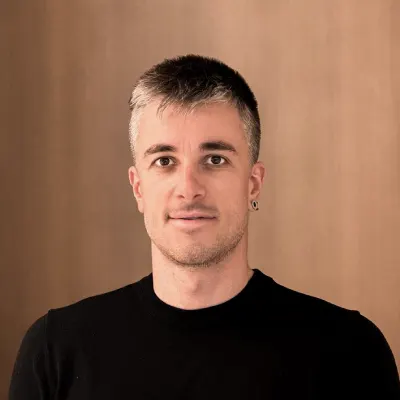
She combines a keen eye for design with a practical and strategic approach. She plays anactive role in defining and developing projects, optimizing each space to maximize its value and functionality.
She holds a degree in Architecture from the University of the Basque Country.
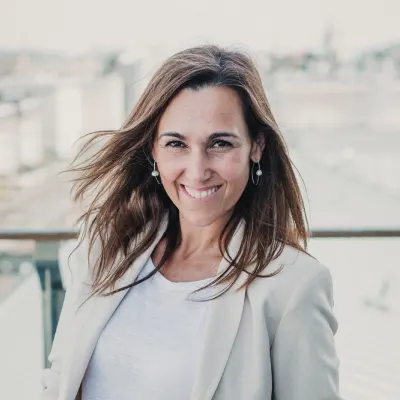
She brings a strategic perspective to design, grounded in consumer behavior. Her work goes beyond aesthetics, focusing each space on making an impact and facilitating the purchasing decision.
, Certified Marketing and Advertising Specialist from CEBANC.
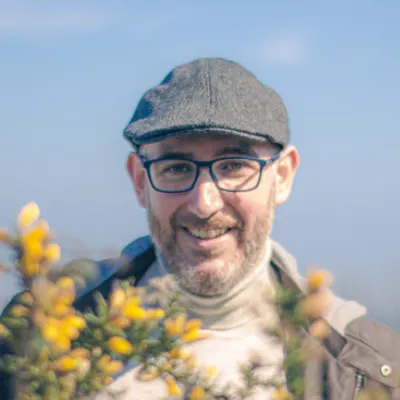
Responsible for developing Reditas's narrative. She works on creating content that clearly and accessibly conveys the value of each project, building trust with investors through transparency.
She holds a degree in Journalism from Ramón Llull University.


 630 463 324
