
Some viewings are decided right on the landing. The door opens, you step into a hallway that smells musty, and before you even reach the living room, you already have a sense of how it’s going to end. We walk through the apartment anyway, taking our time, because sometimes people change their minds once they reach the last room. But most of the time, we step back out onto the street with the same feeling we had when we walked in, and the answer is no.
That scenario plays out much more often than it appears from the outside. Rarely does a month go by without us being offered a chance to view an apartment in San Sebastián, and almost none of them end up becoming part of a Reditas deal. This may seem like a lackluster statistic for a company that makes its living buying homes. We believe exactly the opposite, and in this article we want to explain why the screening process is one of the most important parts of our work and the one that best sums up our real estate investment criteria.
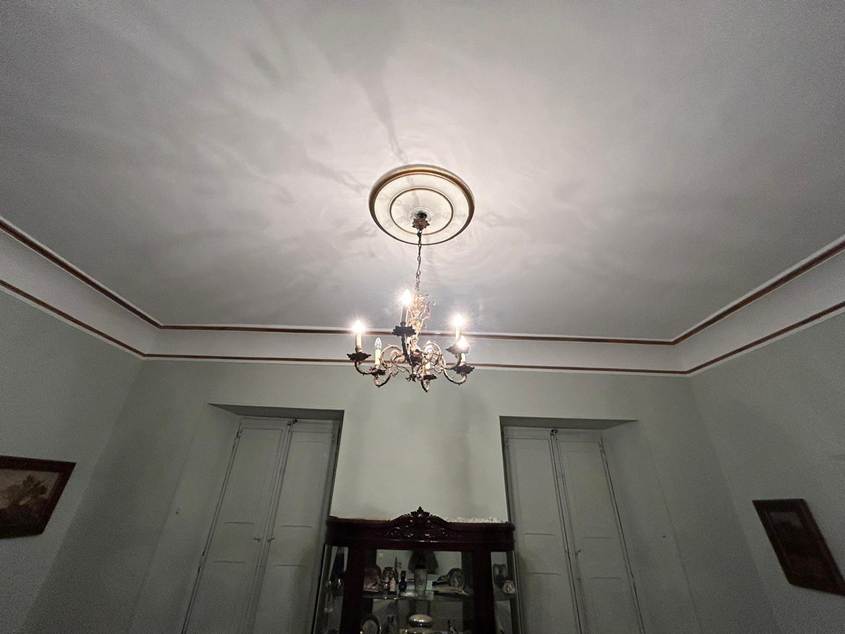
Let’s start with the less technical aspect, which is usually the one that surprises people the most when they ask us. We rule out many homes simply because they don’t speak to us. We go inside, walk through them at a leisurely pace, look out the windows, imagine what the living room might look like without that partition or the kitchen open to the light, and we just can’t picture anyone living there a year from now.
Put that way, it might sound like a whim, but it makes more sense than it seems. Anyone who buys a renovated home in San Sebastián isn’t buying square meters—they’re buying a home where they want to live, whether year-round or during the weeks they spend in the city. If we—who will spend months thinking about that apartment—can’t picture that person, they’ll hardly be able to when the time comes to visit it once it’s finished. In this line of work, intuition is the quick summary of many previous visits.
That feeling can't be captured in a spreadsheet, and that's precisely why it shouldn't be overlooked. A home can have good numbers and still lack character, and when that happens, it usually becomes apparent later on—during the sale—in the form of showings that fail to win anyone over.
Other times, we like an apartment from the moment we walk in, and yet we still pass it up. It’s the most thankless part of the job—because it’s hard to turn down a place you can easily picture yourself living in—but it’s also the most necessary.
The reasons are usually quite mundane. The price the owner is asking leaves no margin to carry out the renovation that the house deserves, and pushing through the deal would force us to cut corners where we shouldn’t. Or the building hides something that isn’t apparent on the first visit: a structure that requires more work than anticipated, a homeowners’ association with outstanding assessments, or a layout that regulations don’t allow us to change as we’d like. None of these problems is insurmountable on its own, but when the project no longer adds up, insisting on it means putting at risk the capital of those who trust us.
We’ve already mentioned in other articles that profitability begins with the purchase. What isn’t always said is the flip side of that idea: a poorly planned purchase can’t be salvaged by any renovation, no matter how good it is. That’s why, before saying yes, we examine the property from every possible angle—and we accept that the most common conclusion of that analysis will be to walk away from it.
There’s a third situation—less common but just as real—in which the “no” doesn’t even depend on us. It happened to us recently. We’d fallen in love with the apartment from the very first visit; the numbers added up; there was room for a nice renovation; and everything was ready to sign the deposit agreement. And just then, the phone rang: it was the real estate agency, calling to tell us that another buyer had beaten us to it and that the deal had already been closed.
In a market like San Sebastián’s, where homes with potential are few and far between, that’s just part of the game. It can be frustrating—because it’s hard to let go of a project we’d already begun to envision—but it’s also best to approach it with a certain degree of composure. Careful analysis takes time, and that time sometimes comes at a cost. We accept that, because the alternative would be to make a hasty decision—and making a hasty decision is exactly what our investors don’t expect from us.
The important thing in such cases is not to let frustration cloud your next decision. Missing out on a good apartment doesn't make the next one a good one, and the temptation to make up for the loss by lowering your standards is probably the most costly mistake you can make in this business.
Steve Jobs once said that he was just as proud of what Apple didn't do as he was of what it did. The quote has been cited so often that it risks sounding like something off an office poster, but it accurately describes a way of working that we share. At Reditas, we make only a few investments each year, and we do so intentionally.
Growing through volume would be relatively simple. All it would take is to lower the bar a little, accept apartments that are “almost” a good fit, and trust that the renovation and the market will do the rest. The problem is that someone ends up paying for that “almost”—and it’s usually the investor. We prefer to devote our time to fewer projects, get to know them thoroughly, and guide them from the first visit until the day someone receives the keys.
That decision has consequences that are felt in everything else. It allows each project to receive the attention it needs, ensures that the work is planned without the time pressure imposed by the next project, and enables us to explain to each investor where their money stands without having to divide our attention among too many fronts.
For those who invest with us, much of this behind-the-scenes work goes unnoticed. It doesn't appear in photos of a completed renovation or in news reports about a sale. And yet, it is probably the part that protects them the most.
Every property you rule out early on is a problem you’ll never have to deal with: an extra expense you won’t have to cover or a unit that won’t sit on the market for months without anyone falling in love with it. No one celebrates the mistakes they haven’t made, but in real estate investing, they carry just as much weight as the right decisions.
This doesn't mean the risk goes away. Every investment carries risk, and so does ours: timelines can be extended, the market can fluctuate, and a construction project always has a few surprises in store. What we can do, however, is reduce the risk that depends on us, and the most effective tool we know for doing that is the ability to say no when something doesn't quite fit.
There’s one final reason why we value the process of elimination so much, and it has to do with learning. Every apartment we visit and pass on teaches us something about the city: how a certain type of building performs, what prices are typical on a specific street, what details make a home in downtown San Sebastián work, and which ones doom it to remain on the market. That knowledge can’t be bought or improvised. It’s accumulated visit by visit, and it’s what allows us to recognize—when it finally appears—the home that’s truly worth it.
Because that home eventually comes along. One day, you open the door, walk down the hallway, and—before reaching the living room—you see the image that was missing from all the others: light streaming in through the windows, the open kitchen, someone sitting at the table on a Sunday morning. The numbers confirm what intuition had already foreshadowed, and only then does a Reditas project truly begin. All the doors we closed before are the ones that make it possible to open that one with peace of mind.
Our team's goal is to acquire real estate, renovate it, and sell it, thereby generating attractive short-term returns. We add value to real estate properties in the exclusive neighborhoods of San Sebastián.
Tax advisor and real estate investment consultant. He has driven and led Reditas since its inception: identifying opportunities, structuring transactions, and maintaining direct relationships with investors and partners. With in-depth knowledge of the San Sebastián market, he is involved in every project, ensuring sound judgment, oversight, and execution.
Bachelor of Business Administration from the University of the Basque Country.

Responsible for the execution of real estate projects. He has a proven track record in construction and renovation, ensuring that deadlines, budgets, and quality standards are met on every project.
He holds a degree in Industrial Engineering from the Polytechnic University of Catalonia and an MBA from ESADE.
Working closely with senior management, he oversees the proper functioning of the management company across various areas, including communications, finance, sales, and others. He maintains direct contact with investors, financial institutions, the various construction companies with which we collaborate on construction projects, and the real estate firms that market our assets. Drawing on his legal expertise, he advises on and participates in the preparation and review of the company’s legal documentation.
Bachelor of Laws from Pompeu Fabra University.

With over 20 years of experience, he specializes in designing investment solutions for high-net-worth clients. At Reditas, he builds relationships with investors based on trust, transparency, and a long-term vision.
He holds a degree in Telecommunications Engineering from the UOC and is a certified financial advisor and wealth manager from the FEF School, Spanish Institute of Analysts.

She combines a keen eye for design with a practical and strategic approach. She plays anactive role in defining and developing projects, optimizing each space to maximize its value and functionality.
She holds a degree in Architecture from the University of the Basque Country.

She brings a strategic perspective to design, grounded in consumer behavior. Her work goes beyond aesthetics, focusing each space on making an impact and facilitating the purchasing decision.
, Certified Marketing and Advertising Specialist from CEBANC.

Responsible for developing Reditas's narrative. She works on creating content that clearly and accessibly conveys the value of each project, building trust with investors through transparency.
She holds a degree in Journalism from Ramón Llull University.


 630 463 324
