
In the real estate sector, it’s commonly believed that value is generated through renovation: in the materials, the finishes, and the final design. It’s a reasonable idea, yet an incomplete one. In a city like San Sebastián, the value of a project begins long before the first contractor arrives. It begins with something that isn’t visible in any building specifications or renderings, but which determines everything that comes afterward: the ability to assess a property before purchasing it. Because not all properties work out, no matter how much money you pour into them, and not everything that starts off on the wrong foot can be corrected later with a good renovation. It’s therefore worth taking the time to focus on that preliminary phase—the one that’s almost never discussed—because that’s where a real estate deal is truly decided.
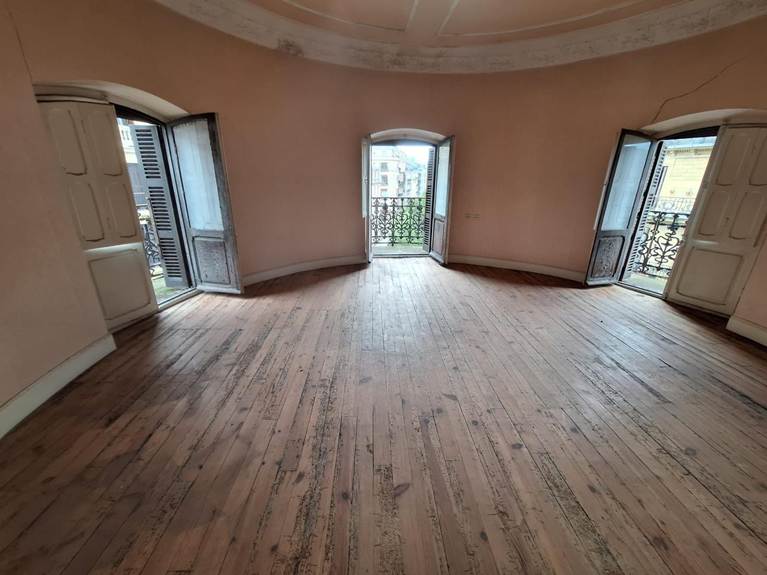
One of the most common mistakes in the industry—and also one of the most costly—is assuming that any home can become a good investment as long as the renovation is done well. The reality is far more complicated than that. There are properties that work almost from the get-go, where all you need to do is build on what’s already there, and there are others that, no matter how carefully the work is done, never quite come together. The difference rarely lies in the execution. It lies in the preliminary analysis—that quiet phase that takes place before signing the contract.
But that kind of assessment has nothing to do with a standard technical inspection. Assessing a home means understanding what it has the potential to become, and that requires paying attention to things that aren’t always immediately apparent on a first visit: how light enters at different times of day, how the space “breathes” when you walk through it slowly, how the home relates to what’s on the other side of the window, and what feeling it leaves you with when you leave. All of this leads to the question that truly matters—the one we always ask ourselves before moving forward: Does this space make sense for the person who will live there?
It’s a question the market often overlooks, precisely because it tends to focus on square footage. “This apartment is X square meters,” people say, as if that were the end of the conversation. In San Sebastián, that metric alone isn’t very useful: we’ve seen apartments with plenty of square meters that simply don’t work, and the reason is almost always the same—a lack of light. We’ve also seen the opposite case: homes with a more modest floor area that, once the light issue is resolved, are in a completely different league. Added to this are other factors that at first glance seem secondary—orientation, ceiling height, the relationship to the street and the neighborhood—and which in reality are just as much a part of that initial assessment as any floor plan. And from there, almost naturally, the next layer of that assessment emerges: how the interior space is organized.
Because layout isn’t just about how the rooms are arranged on a floor plan. It’s about how the space is experienced in everyday life—something a floor plan can never fully capture. There are homes that, on paper, seem perfectly reasonable but don’t flow well when you walk through them; and there are others, more complex at first glance, that allow you to create a coherent space with the right adjustments.
That’s why analyzing a home involves, in practice, distinguishing three things: which parts already make sense as they are, which ones need to be rethought from scratch, and to what extent changes can be made without disrupting the overall harmony. Not everything can be solved with a good interior design idea, and sometimes the best decision is to leave something alone if it already works. That said, this process of analyzing a home doesn’t end within its four walls—it continues the moment you open the door and step out onto the street.
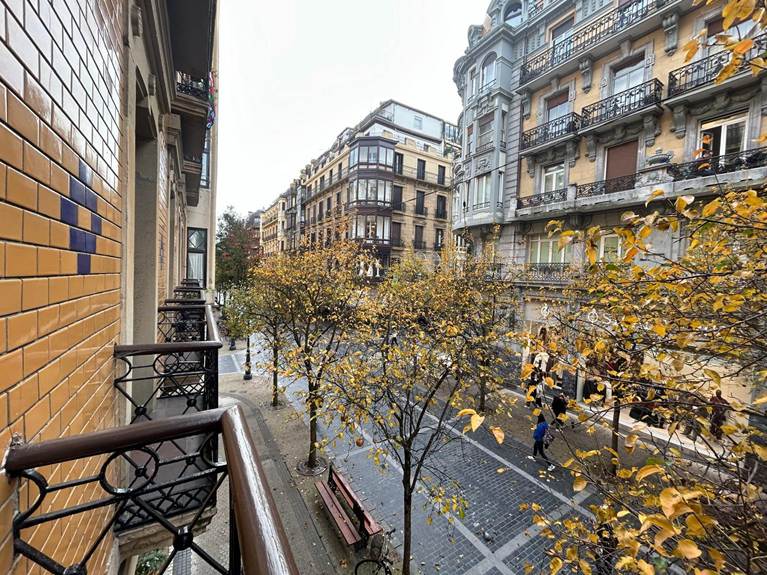
In San Sebastián, a home cannot be fully understood if it is viewed in isolation from its surroundings. One street is not the same as the one next to it. One section of an avenue is not the same as another, nor is one orientation the same as its opposite. The proximity to the river, the connection to the Ensanche district, the quality of the building, and the floor level of the home—all of these factors add to or detract from its value before a single partition wall has even been moved.
Assessing a home, then, also means understanding its place within the city, because in many cases—more than one might think—the value of a transaction lies as much outside the home as inside it. And here we should be honest: none of this can be learned solely from data or a well-measured floor plan. There is a part of this process that involves something less tangible.
That part has to do with intuition—that almost instinctive ability to sense whether an asset “says something” or remains silent no matter how closely you look at it. That intuition is by no means a substitute for analysis, but it does guide it; it does help you decide where it’s worth digging deeper and where it isn’t.
And that intuition, it’s worth noting, doesn’t just appear out of thin air. It’s built up over the years, through past projects, through mistakes that are no longer repeated, and through a knowledge of the market that only time can provide. Often, it is precisely that honed intuition that distinguishes a good project from a truly great one. But all that analysis—of the space, the surroundings, and what experience teaches—would make little sense if it weren’t done with a specific person in mind: the person who, in the end, will live there.
Assessing a home isn’t just about understanding the space itself. It’s about understanding who that space is for—something that, in a market like San Sebastián’s—where buyers have their own criteria, experience, and fairly clear expectations—is almost essential. It’s not about turning just any property into something attractive. It’s about preparing it so that it’s a good fit for the buyer, and that fit can’t be improvised at the end of the renovation: it’s decided from day one, often even before the purchase agreement is signed. When that assessment is done right from the start, the renovation ceases to be a mystery.
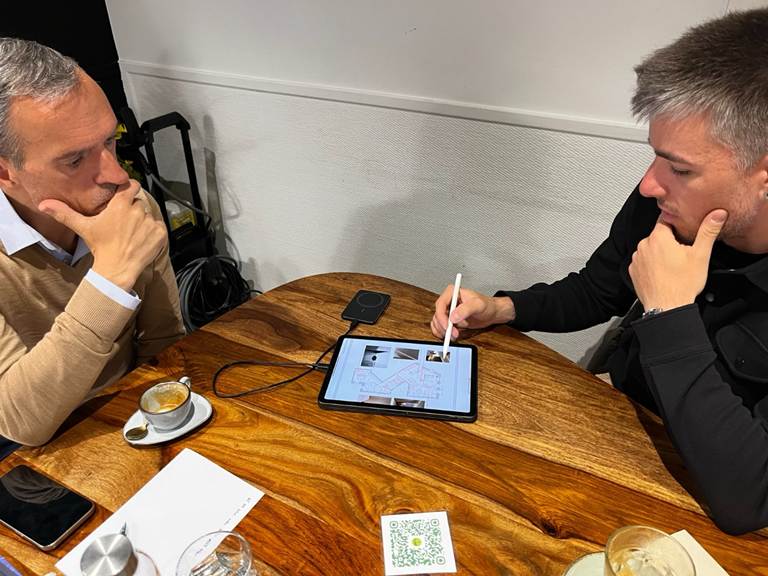
Because when the initial assessment is correct, something interesting happens: many of the important decisions have already been made before the project even begins. What kind of home it will be, how it will be laid out, and the purpose of each space in the house. In that context, the renovation ceases to be something that’s figured out as you go along and becomes, quite simply, the orderly execution of something that was already clear from the start.
So, in San Sebastián, the success of a project doesn’t begin with the renovation. It begins much earlier—with the ability to assess a property, understand its true potential, and honestly decide whether or not it fits into this very unique market. When that assessment is accurate, everything else tends to fall into place on its own. And when it isn’t, no finish—no matter how good—can make up for it.
Our team's goal is to acquire real estate, renovate it, and sell it, thereby generating attractive short-term returns. We add value to real estate properties in the exclusive neighborhoods of San Sebastián.
Tax advisor and real estate investment consultant. He has driven and led Reditas since its inception: identifying opportunities, structuring transactions, and maintaining direct relationships with investors and partners. With in-depth knowledge of the San Sebastián market, he is involved in every project, ensuring sound judgment, oversight, and execution.
Bachelor of Business Administration from the University of the Basque Country.

Responsible for the execution of real estate projects. He has a proven track record in construction and renovation, ensuring that deadlines, budgets, and quality standards are met on every project.
He holds a degree in Industrial Engineering from the Polytechnic University of Catalonia and an MBA from ESADE.
Working closely with senior management, he oversees the proper functioning of the management company across various areas, including communications, finance, sales, and others. He maintains direct contact with investors, financial institutions, the various construction companies with which we collaborate on construction projects, and the real estate firms that market our assets. Drawing on his legal expertise, he advises on and participates in the preparation and review of the company’s legal documentation.
Bachelor of Laws from Pompeu Fabra University.

With over 20 years of experience, he specializes in designing investment solutions for high-net-worth clients. At Reditas, he builds relationships with investors based on trust, transparency, and a long-term vision.
He holds a degree in Telecommunications Engineering from the UOC and is a certified financial advisor and wealth manager from the FEF School, Spanish Institute of Analysts.

Responsible for on-site technical execution, he coordinates teams and oversees every phase of the project to ensure quality, efficiency, and control throughout the renovation process.
He holds a degree in Public Works and Civil Engineering from the Polytechnic University of Catalonia.

She combines a keen eye for design with a practical and strategic approach. She plays anactive role in defining and developing projects, optimizing each space to maximize its value and functionality.
She holds a degree in Architecture from the University of the Basque Country.

She brings a strategic perspective to design, grounded in consumer behavior. Her work goes beyond aesthetics, focusing each space on making an impact and facilitating the purchasing decision.
, Certified Marketing and Advertising Specialist from CEBANC.

Responsible for developing Reditas's narrative. She works on creating content that clearly and accessibly conveys the value of each project, building trust with investors through transparency.
She holds a degree in Journalism from Ramón Llull University.


 630 463 324
