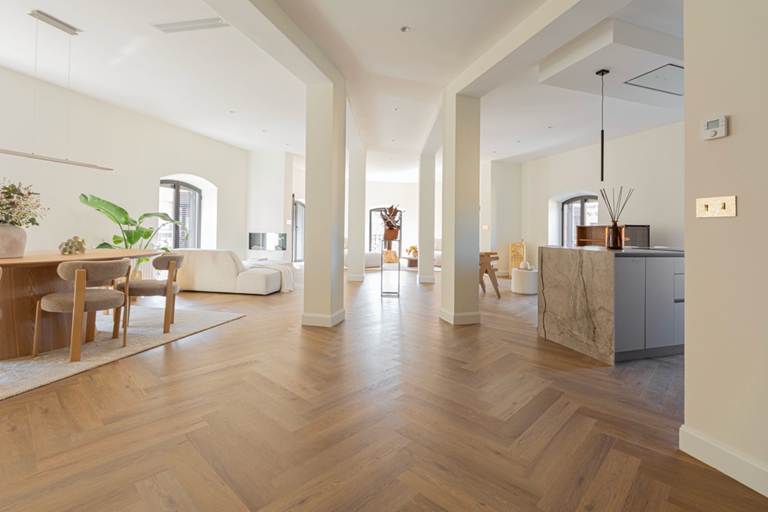
There is a special kind of silence in a newly renovated, still-empty home. It isn’t the sad silence of an abandoned house, but rather an expectant, almost restrained one—like that of a theater a minute before the curtain rises. The walls smell of fresh paint, the floor gleams without a single footprint yet, and in some kitchen drawer, the manufacturer’s label remains—no one has bothered to remove it because no one has used that drawer. That home is finished, but it’s missing the most important thing: someone to live in it.
We don’t talk much about that moment—the moment of handover—on this blog. We’ve discussed how to find a property, how to buy it wisely, and how to renovate it while preserving what needs to be preserved. But we rarely talk about what happens next, when all that work finally becomes a real home. And we believe it’s worth sharing, because that moment encapsulates the true purpose of everything we do.
Delivery Day
The day of the handover is hardly spectacular, and that also says a lot about who we are. There are no grand gestures or speeches. There’s a notary, some signatures, and a set of keys changing hands. Sometimes the person who’s going to live in that house is present; other times, they’re represented by someone they trust. But in any case, that simple gesture—handing over a set of keys—brings to a close a process that had been underway for months, long before anyone signed anything.
What happens right before that moment is more important than it seems. Going over every detail, checking that the fixtures and fittings work as they should, making sure the home is exactly as promised: that final check is part of the same careful approach that guided the purchase and renovation. It’s not about finishing quickly; it’s about finishing well—and that difference is especially noticeable in the final stages of the process, when no one is watching except the person who’s going to live there.
Why this isn't the end, but a goal
It’s easy to think of the sale as the end of an investment transaction— the moment when the books are closed and the profits are distributed among those who participated. And in a sense, it is. But from the perspective of the home itself, the sale isn’t an end; it’s the goal toward which the entire process has been heading from day one. Identifying the property, evaluating it before buying, negotiating wisely, and renovating it with respect for its facade and history—all of that only makes complete sense when it culminates in a key being handed over to someone who is going to live there.
This way of understanding the process influences many decisions that are made long before we even think about selling. When we remodel a kitchen or redesign a living room, we don’t think of some abstract buyer—we think of the real person who, months later, will have breakfast in that kitchen or welcome their family into that living room. This exercise of imagining who will live in the house—so often mentioned on this blog—is not a figure of speech. It is, quite literally, the purpose behind every decision we make.
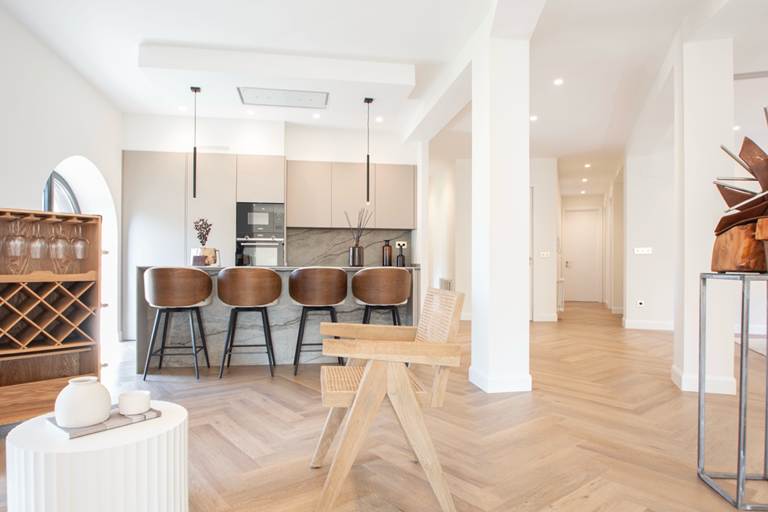
Who do we give the keys to?
We’ve already explained in another article who buys the properties we renovate: individuals—many of whom are over sixty—from both Spain and abroad, who are looking for a home to live in, whether as their primary residence or as a second home in a city that captivates everyone who visits it. We’re talking about specific people, with first and last names, who, after signing the papers at the notary’s office, do something as simple and as definitive as hanging curtains or deciding where to put the sofa.
That's probably the best way to understand what Reditas does from start to finish: we buy homes that need a second chance and put them back on the market so someone can turn them into their home. We transform them and let them go.
What Housing Leaves Behind
When an outdated home—with obsolete facilities and poorly utilized spaces—returns to the market after being thoughtfully renovated, it doesn’t just change the life of the person who buys it. It also changes, to some extent, the building it’s in, the street it faces, and the neighborhood it’s part of. The housing stock of a city like San Sebastián consists, for the most part, of buildings with more than a century of history, and every home that is restored with respect contributes, even if only modestly, to the quality of the urban landscape as a whole.
That contribution is rarely mentioned, perhaps because it lacks the appeal of a profitability figure or the catchy headline of a unique project. But it is part of what we mean by adding value to a home: not just carrying out a well-executed project, but leaving it in better condition than it was found.
The process doesn't end with the sale
We like to think that the standards we uphold don’t end on the day of delivery. It continues to be evident in the way we respond if any questions arise after the sale, in our willingness to explain every detail of the renovation to those already living in the home, and in the peace of mind that comes from knowing that behind every key we hand over lies a process we don’t hide from. Ultimately, that is the best proof that our standards aren’t just a sales pitch: they’re a way of working that endures even when there’s nothing left to sell.
The silence of that empty home doesn't last long. Soon the moving boxes arrive, along with the first sounds of a new life taking shape and the happy chaos of someone who has just moved into a new home. And that, without needing any further explanation, is the result we've been striving for from day one.
Our team's goal is to acquire real estate, renovate it, and sell it, thereby generating attractive short-term returns. We add value to real estate properties in the exclusive neighborhoods of San Sebastián.
Tax advisor and real estate investment consultant. He has driven and led Reditas since its inception: identifying opportunities, structuring transactions, and maintaining direct relationships with investors and partners. With in-depth knowledge of the San Sebastián market, he is involved in every project, ensuring sound judgment, oversight, and execution.
Bachelor of Business Administration from the University of the Basque Country.

Responsible for the execution of real estate projects. He has a proven track record in construction and renovation, ensuring that deadlines, budgets, and quality standards are met on every project.
He holds a degree in Industrial Engineering from the Polytechnic University of Catalonia and an MBA from ESADE.
Working closely with senior management, he oversees the proper functioning of the management company across various areas, including communications, finance, sales, and others. He maintains direct contact with investors, financial institutions, the various construction companies with which we collaborate on construction projects, and the real estate firms that market our assets. Drawing on his legal expertise, he advises on and participates in the preparation and review of the company’s legal documentation.
Bachelor of Laws from Pompeu Fabra University.
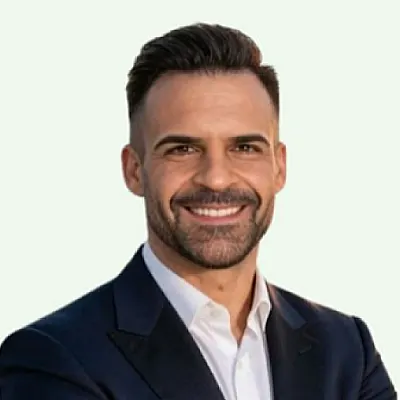
With over 20 years of experience, he specializes in designing investment solutions for high-net-worth clients. At Reditas, he builds relationships with investors based on trust, transparency, and a long-term vision.
He holds a degree in Telecommunications Engineering from the UOC and is a certified financial advisor and wealth manager from the FEF School, Spanish Institute of Analysts.
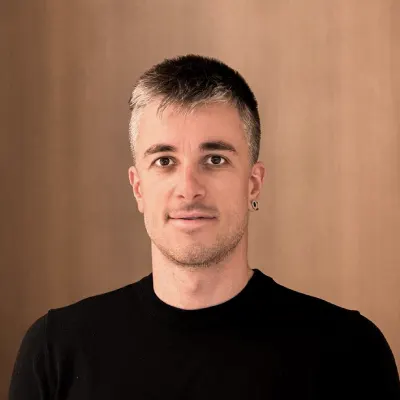
She combines a keen eye for design with a practical and strategic approach. She plays anactive role in defining and developing projects, optimizing each space to maximize its value and functionality.
She holds a degree in Architecture from the University of the Basque Country.

She brings a strategic perspective to design, grounded in consumer behavior. Her work goes beyond aesthetics, focusing each space on making an impact and facilitating the purchasing decision.
, Certified Marketing and Advertising Specialist from CEBANC.

Responsible for developing Reditas's narrative. She works on creating content that clearly and accessibly conveys the value of each project, building trust with investors through transparency.
She holds a degree in Journalism from Ramón Llull University.


 630 463 324
